Cottage cheese is a fresh, soft cheese made from the curds of cow’s milk. It has a mild flavor with a bit of tang and comes in small or large curds, depending on how you make it. In the USA, it’s a popular choice for healthy snacks, salads, or even baking because it’s high in protein and low in fat if you choose skim milk. Making it at home lets you control the freshness and avoid added preservatives found in store-bought versions.
People have been making cottage cheese for a long time as a simple way to use milk. Today, home cooks across the country share their methods online, from basic recipes to ones with a twist. You can use whole milk for a creamier result or skim milk for something lighter. The process involves heating the milk, adding an acid to form curds, and then draining the liquid called whey.

Basic Ingredients for Homemade Cottage Cheese
Most recipes start with just a few items you likely have in your kitchen. The main one is milk – whole, low-fat, or skim all work, but whole milk gives a richer taste. Then, you need an acid to curdle the milk, like white vinegar or lemon juice. Salt is optional but adds flavor.
For a small batch, try 1 gallon of milk, 1/4 cup of white vinegar, and 1 teaspoon of salt. This makes about 4 cups of cottage cheese. According to Seven Sons Farms, using three basic ingredients like milk, vinegar, and salt results in a soft, fresh cheese with a mild acidic taste. They suggest whole milk for the best texture.
If you prefer lemon juice, use fresh-squeezed for better flavor. A post on Reddit in the cottagecore community shares a recipe with 8 cups of milk and 4-6 tablespoons of lemon juice, adding a pinch of salt if wanted. This method heats the milk to 185-195°F without boiling.
I’m a big fan of making cottage cheese at home, so I tried a new version with lemon. It comes together so fast, it’s hard to believe! The taste is mild and creamy, kind of like ricotta.
byu/tell_me_karina incottagecore
Some recipes add heavy cream at the end for extra creaminess. On David Lebovitz’s site, a recipe uses 1 quart of whole milk, liquid rennet, salt, and 6 tablespoons of heavy cream. This gives a smoother finish.
Quick Summary Card
Homemade Cottage Cheese
High Protein • Fresh TasteInstructions (Vinegar/Lemon)
-
1. Heat the Milk Pour 1 gallon of milk (Whole is best) into a large pot. Heat slowly over medium heat to 190°F (88°C). You’ll see small bubbles, but do not boil.
-
2. Add Acid & Rest Remove from heat. Stir in ½ cup vinegar OR ½ cup lemon juice. Let it sit undisturbed for 30 mins. Curds (solids) will separate from whey (liquid).
-
3. Drain & Rinse Line a colander with cheesecloth. Pour mixture in to drain for 15 mins. Rinse curds under cool water to remove the sour acid taste.
-
4. Season Transfer curds to a bowl. Mix in salt.
Optional: Stir in a few tablespoons of heavy cream for a richer, store-bought texture.
Step-by-Step Guide to the Vinegar Method
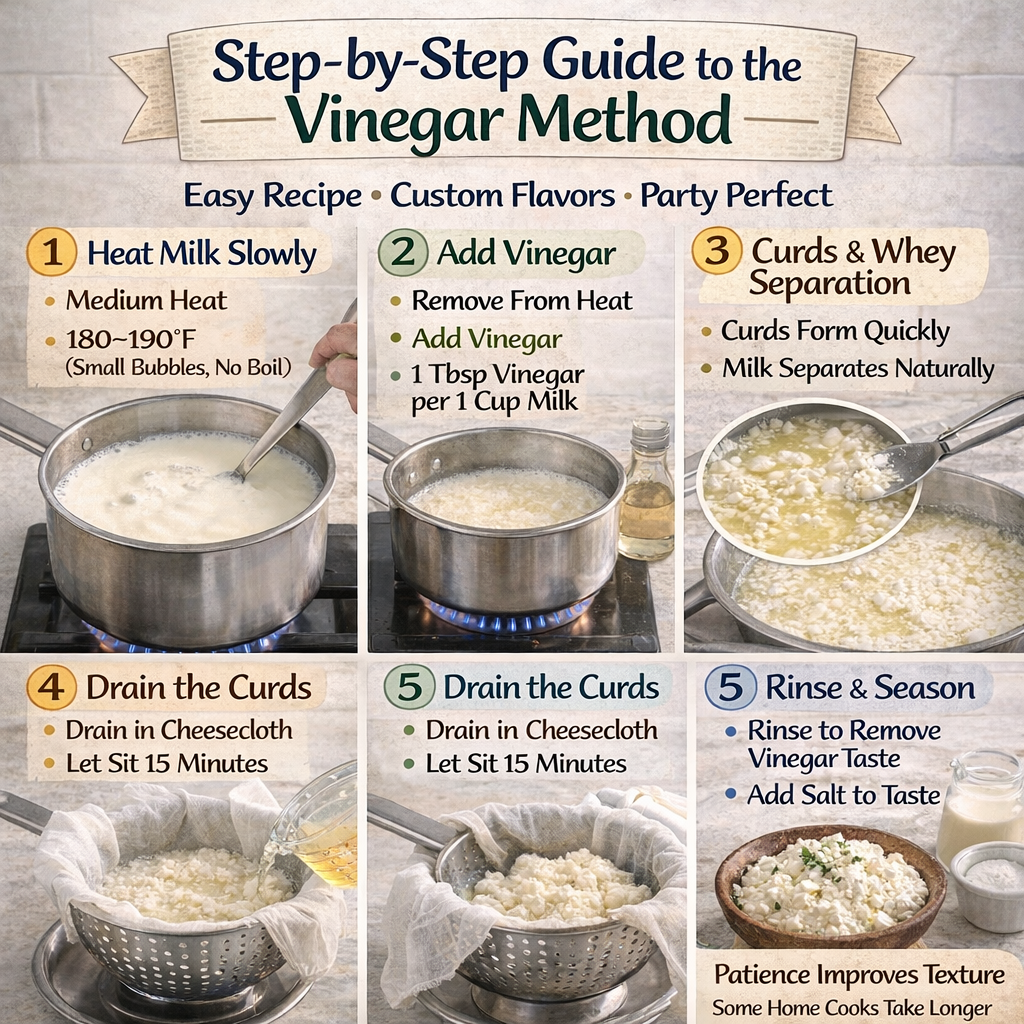
This is one of the easiest ways to make cottage cheese and takes under an hour. Start by pouring your milk into a large pot. Heat it slowly over medium heat, stirring now and then to avoid scorching. Aim for 180-190°F – you’ll see small bubbles around the edges.
Once hot, remove from heat and stir in the vinegar. Let it sit for 1-2 minutes as curds form. The milk will separate into solid curds and liquid whey. According to Allrecipes, for 1 cup of milk, use 1 tablespoon of vinegar and let the curds form quickly.
Line a colander with cheesecloth and set it over a bowl. Pour in the mixture to drain. Let it sit for 15 minutes, then rinse the curds under cool water to remove any vinegar taste. Add salt and mix gently. If you want it creamier, stir in a bit of heavy cream or milk.
A user on X shared that after trying three recipes, they made 5 pounds using raw milk, taking about 4 days from start to finish. This shows patience can lead to great results.
Tips for Perfect Curds
To get smooth curds, don’t stir too much after adding the acid. Let the mixture rest undisturbed. If curds don’t form well, your milk might be ultra-pasteurized – try regular pasteurized milk instead. Rinse thoroughly to keep it mild.
On Facebook, a homesteading group post recommends 1 gallon of whole milk, 1/4 cup vinegar, 1 cup cream, and 1 teaspoon salt. Heat on low, add vinegar, and strain for a cool, creamy result.
Using Lemon Juice Instead of Vinegar
Lemon juice gives a fresher taste without the sharp vinegar note. The steps are similar: heat 1/2 gallon of milk to 190°F, add 6 tablespoons of lemon juice, and stir briefly. Let sit for 30 minutes.
A Reddit post in VegRecipes uses 1 gallon of milk and 1/4 cup lemon juice, heating to 180°F. After adding the acid, curds separate, then rinse and salt.
Homemade Cottage Cheese
byu/CookeryHQ inVegRecipes
Drain for 5-7 minutes for soft texture or longer for firmer. This method is great for vegetarian diets since it’s plant-based acid.
Common Mistakes to Avoid
Don’t boil the milk – it can make curds tough. Use a thermometer for accuracy. If whey is cloudy, add more acid next time. Store in an airtight container in the fridge for up to a week.
Cultured Cottage Cheese with Yogurt
For a tangier version, use yogurt as a starter. Heat 1 gallon of skim milk to 105°F, mix in 4 tablespoons of plain Greek yogurt, and let sit for 8 hours. Then, heat to near boil and simmer for 15 minutes.
According to a Reddit thread in cheesemaking, this simple method with milk and yogurt yields soft results. It’s like traditional fermenting.
On Instagram, shared via a reel, heat 1 gallon of milk to 180°F, add 1/4 cup vinegar or lemon, strain, and save whey. Optional salt or yogurt for flavor.
A Facebook group suggests 2 cups cottage cheese base with milk and vinegar, but that’s for blending.
Rennet-Based Recipe for Smoother Texture
Rennet is an enzyme that helps milk coagulate. Heat 1 quart milk to 85°F, add 4 drops liquid rennet, and let sit. According to David Lebovitz, stir in rennet, cover, and wait 4-8 hours until firm.
Cut curds, heat to 110°F, drain, and add cream. This makes larger curds, like store-bought.
Variations and Flavor Add-Ins
Once made, mix in herbs, garlic, or fruit. For savory, add chives and pepper. Sweet: pineapple or berries.
A X post from a farmer uses cottage cheese for flatbread: 1 cup cheese, 2 eggs, bake at 400°F for 40 minutes.
On Reddit in ketorecipes, a Romanian recipe ferments milk with yogurt for 12 hours, then heats without boiling.
Health Benefits and Uses
Homemade cottage cheese is packed with protein – about 25 grams per cup – and calcium. It’s great for weight management and muscle building. Eat it plain, in lasagna, or smoothies.
A YouTube video shows three ways: acidify with vinegar, culture with buttermilk, or use rennet.
In a Facebook homesteading post, users troubleshoot gritty texture, suggesting lower heat.
Storage and Shelf Life
Keep in the fridge for 5-7 days. Freeze for up to 3 months, but texture may change. Use whey in soups or baking.
According to eGullet Forums, use 1/2 gallon milk, 6 tablespoons vinegar, salt, and cream. Heat to 190°F, add vinegar, drain.
Advanced Tips from Home Cooks
For raw milk, clabber naturally. A X user suggests clabbering then heating to 120°F.
On Reddit in Cheese, heat to 185°F, add lemon, drain for 15 minutes.
A Facebook post details warming 1.5 gallons milk, adding yogurt, waiting 24 hours.
Recipes Using Your Homemade Cottage Cheese
Try syrnyky: 250 grams cheese, 1 egg, sugar, salt, vanilla, flour. Fry both sides. From a X post.
Or cheesecake: 1 cup cheese, egg, yogurt, sweetener. Bake at 350°F. Another X share.
For breakfast casserole: eggs, cheese, spinach. A X user blends for creaminess.
Historical Notes on Cottage Cheese Making
In the USA, cottage cheese became popular in the early 1900s as a diet food. Home methods echo farm traditions.
A X post boils 2 liters milk with salt and vinegar, drains overnight.
On Reddit in Old_Recipes, a 1920s method uses store milk and yogurt.
Troubleshooting Common Issues
If curds are small, use less acid. For more yield, whole milk helps. Always use fresh milk.
A Facebook post from Farmhouse on Boone uses minimal ingredients for dips or snacks.
With practice, you’ll get creamy results every time. Making cottage cheese at home is rewarding and saves money.